For Care Facilities
Loneliness is the diagnosis. We help you treat it.
Over half of your residents experience clinical loneliness—the highest rate of any population group. You see it in the faces that watch the front door. You feel it in the weight your activities staff carry home every night.
You also know that loneliness isn't just sad—it's clinical. It's associated with a 30-50% increased risk of dementia. It correlates with depression, behavioral incidents, and mortality. CMS cares about psychosocial wellbeing. Families ask what you're doing about it. And your team is already stretched beyond capacity.
Elder Letters provides a documented intervention for social isolation that requires zero additional staff time and produces measurable outcomes you can report.
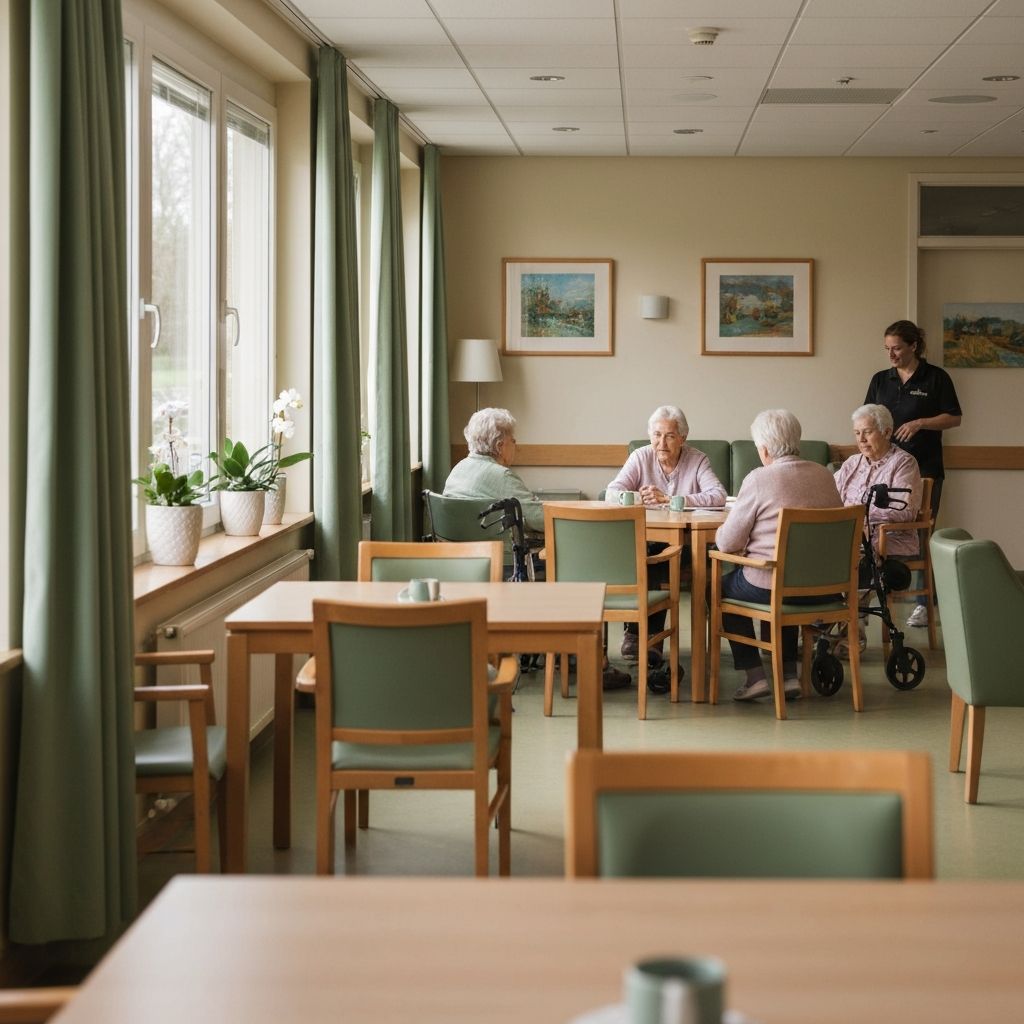
Institutionalized elderly show the highest loneliness prevalence of any population group—nearly double the rate among seniors generally.
Federal surveys show approximately 11-13% of residents receive no visitors at all. Many more are visited only sporadically.
The majority of your residents have moderate to severe cognitive impairment—requiring specialized communication approaches you're not staffed to provide individually.
These statistics aren't news to you. What's missing is a scalable intervention that addresses them without requiring the additional FTEs your budget doesn't have or the volunteers who burn out after three months.
Here's the harder truth the data reveals: visitation rates don't tell the whole story. Even residents who receive occasional visitors experience profound loneliness. The problem isn't just who comes through your doors—it's the consistency and quality of connection. Sporadic visits without sustained relationship may actually deepen isolation when they stop.
Your activities directors are brilliant and stretched thin. Your social workers carry caseloads that make individualized loneliness interventions practically impossible. And the family satisfaction surveys keep asking about emotional wellbeing and social engagement—areas where you feel powerless to move the needle with current resources.
A documented intervention that doesn't require staff time.
Research demonstrates that ten weeks of weekly handwritten letters reduces loneliness scores by 63% on the UCLA Loneliness Scale—from severe to minimal. That's not engagement programming. That's a clinical outcome.
Elder Letters provides professional letter-writing companionship to your residents: weekly personalized correspondence from trained writers who learn each resident's name, history, and story. Letters arrive consistently, are tailored to cognitive capacity, and create the experience of mattering—the psychological foundation that combats isolation.
Dear Mrs. Chen,
The magnolia trees are blooming here this week, their white petals opening like small miracles. I wondered if you had magnolias where you grew up in Georgia—I understand you spent your childhood there before moving north for your teaching career.
I've been thinking about what it must have been like to shape young minds for all those years. What drew you to teaching in the first place? Was there a particular subject or grade level that brought you the most joy?
You are remembered today, Mrs. Chen. Your years of dedication matter, and the students whose lives you touched carry pieces of your wisdom forward.
With warmth,
Margaret
Your staff distributes mail—that's it. We handle intake, writer matching, correspondence production, and quality control. Monthly reports document engagement and outcomes in formats suitable for care plans, family communications, and regulatory reporting.
The intervention integrates with your existing operations rather than adding to them.
How it works in your facility.
Intake:
You provide a roster with basic resident information—name, age, former occupation, hometown, known interests, cognitive status, topics to avoid. We can work from what you have; we don't require extensive data collection from your stretched staff.
Delivery:
Letters arrive weekly via bulk mail to your facility, sorted by resident name. Your team distributes them with regular mail delivery—no additional workflows.
Coordination:
A dedicated account manager handles ongoing communication. Monthly check-ins (15 minutes) keep resident information current. Quarterly reviews assess what's working and what needs adjustment.
Documentation:
We provide monthly reports showing residents served, engagement indicators (letters kept, responses, staff observations), and outcome data if you're using assessment tools. Reports are formatted for care plan integration and family communication.
Resident enrollment:
Opt-in process respects resident autonomy. Family notification is your preference—some facilities inform families, others let the letters speak for themselves.

Content adapted for your populations.
Memory Care
For residents with cognitive impairment: simplified language, short sentences, large clear print, photo inclusions, focus on emotional warmth over information. Letters designed to be read aloud by staff if needed. Content triggers preserved long-term memories rather than requiring recent recall.
Cultural Adaptation
Spanish, Mandarin, and other languages available. Content calibrated for cultural backgrounds and traditions. As senior populations diversify, correspondence that honors residents' heritage becomes increasingly essential.
Life Story Elicitation
For residents whose families want correspondence built around their parent's biography. We gather memories, milestones, and meaningful details — then weave them into letters that honor a full life rather than a single moment. Optional keepsake compilation included at the Premium tier.
Coverage levels designed for facility operations.
All tiers include professional writers trained in elder communication, facility coordination, and quality-controlled correspondence. Pricing reflects volume economics—the more residents served, the lower the per-resident cost. All contracts are month-to-month.
Targeted Coverage
$40-50/resident/month
For facilities addressing highest-need populations first: residents who never receive visitors, new admissions, recent widow/widowers, those with documented loneliness concerns.
- Monthly letters (4/year per resident) to targeted population
- Basic personalization from facility-provided roster
- Seasonal and holiday acknowledgments
- Quarterly coordination calls
- Monthly summary reports
- Memory care content track available
Comprehensive Community
$55-65/resident/month
Community-wide coverage with bi-weekly letters for all participating residents. Enhanced personalization, bidirectional correspondence option, and outcomes tracking included.
- Everything in Targeted, plus:
- Bi-weekly letters (2/month per resident)
- Enhanced intake process for deeper personalization
- Residents can write back (we provide materials and handle responses)
- UCLA Loneliness Scale assessments at baseline and 10 weeks
- Care plan integration documentation
- Monthly engagement reporting
Premium Program
$65-75/resident/month
Weekly letters, handwritten option, specialized content tracks, and life story elicitation for facilities positioning as premium providers with exceptional psychosocial care.
- Everything in Comprehensive, plus:
- Weekly letters (research-proven optimal frequency)
- Handwritten letter option for appropriate residents
- Life Story series compiled into keepsake booklet
- Family Bridge service (families submit photos/updates for inclusion)
- "Mail Call" programming support for group distribution events
- White-glove account management with monthly on-site or video check-ins
Volume discounts available: 5% for 50-100 beds, 10% for 100-150 beds, 15% for 150+ beds or multi-facility organizations. Annual prepay discounts available. Contact us for enterprise pricing.
Outcomes you can document and report.
The evidence base for letter-based loneliness intervention is robust. A published case study demonstrated that ten weeks of weekly letters reduced UCLA Loneliness Scale scores from 33/60 (severe) to 12/60 (minimal)—a 63% improvement. Meta-analyses of reminiscence-focused interventions (the content approach we use) show moderate to large effect sizes for depression reduction and improved life satisfaction in older adults.
in loneliness scores over 10 weeks of weekly correspondence.
Published case study using UCLA Loneliness Scale.
For facilities using our Comprehensive or Premium tiers, we provide:
- •Baseline and follow-up UCLA Loneliness Scale assessments (we supply tool and analysis)
- •Quarterly outcome summaries formatted for quality reporting
- •Documentation suitable for care plan integration (ICD-10 code Z60.2: Problems related to living alone)
- •Family communication templates showing what their loved one receives
- •Staff observation aggregation (engagement indicators, mood changes, behavioral correlations)
This isn't just feel-good programming. It's a documentable psychosocial intervention with measurable outcomes—the kind of evidence that supports care plan justification, family satisfaction responses, and quality reporting.
What you'd pay for alternatives.
| Alternative | Annual Cost | Limitation |
|---|---|---|
| Additional activities FTE | $45,000-60,000 + benefits | Serves ~60 residents max; staffing market is brutal |
| Volunteer coordinator | $35,000-50,000 | Volunteers still burn out; consistency impossible |
| Technology solutions | $40-65/resident/month + hardware | Only 48% of low-income seniors have home broadband; cognitive impairment makes devices unusable for many |
| Elder Letters (60 residents) | ~$36,000/year | No staff time required; no technology barriers; documented outcomes |
For families paying $5,000-10,000/month in care costs, adding $50/month (0.5-1% of their total spend) for professional companionship services is negligible. Many facilities incorporate letter service into their standard offerings; others present it as an optional enhancement for families seeking premium care.
Either way, the ROI case is straightforward: measurable loneliness reduction, family satisfaction improvement, regulatory alignment, and marketing differentiation—at a cost lower than most staffing alternatives and without the recruiting challenges.
Live in three weeks.
Discovery
Week 1
30-minute call with your leadership. We understand your populations, priorities, and operational constraints. You decide which tier and coverage scope fits.
Intake
Week 2
You provide resident roster and available information. We don't require extensive data collection—we work with what you have. Enrollment process respects resident autonomy.
Writer Matching
Week 2-3
We assign trained writers to your resident population, calibrating for cognitive needs, cultural backgrounds, and communication preferences.
First Letters
Week 3
Letters arrive at your facility sorted by resident name. Your team distributes with regular mail. You receive delivery confirmation and copies of initial correspondence.
Ongoing: Monthly coordination calls, quarterly reviews, continuous quality monitoring. We adapt as your population changes—new admissions, discharges, shifting needs.
Quality controls that protect your residents.
Your residents are vulnerable. We take that seriously.
Writer training:
All writers complete training in elder communication, elderspeak avoidance, dementia-appropriate content, and emotional sensitivity. Writers are vetted, supervised, and reviewed regularly.
Content review:
Every letter from new writers undergoes quality review. Ongoing random sampling ensures standards are maintained. Content guidelines prevent manipulation, inappropriate emotional dependency, or anything that could cause distress.
Facility coordination:
If any resident shows distress or confusion about receiving letters, we pause immediately and coordinate with your team. We provide guidance for staff on introducing the service to residents and handling questions.
Transparency:
We never pretend to be family or friends. Letters clearly identify who we are and why we're writing. Residents understand this is a service—and they respond to the genuine care behind it regardless.
Liability:
We maintain professional liability insurance. Our writers are independent contractors with clear boundaries. We handle complaints within 48 hours.
Program Overview
See the full picture. Share it with your team.
Our care center presentation walks through the evidence, the operational model, and the outcomes — in a format designed for leadership review.
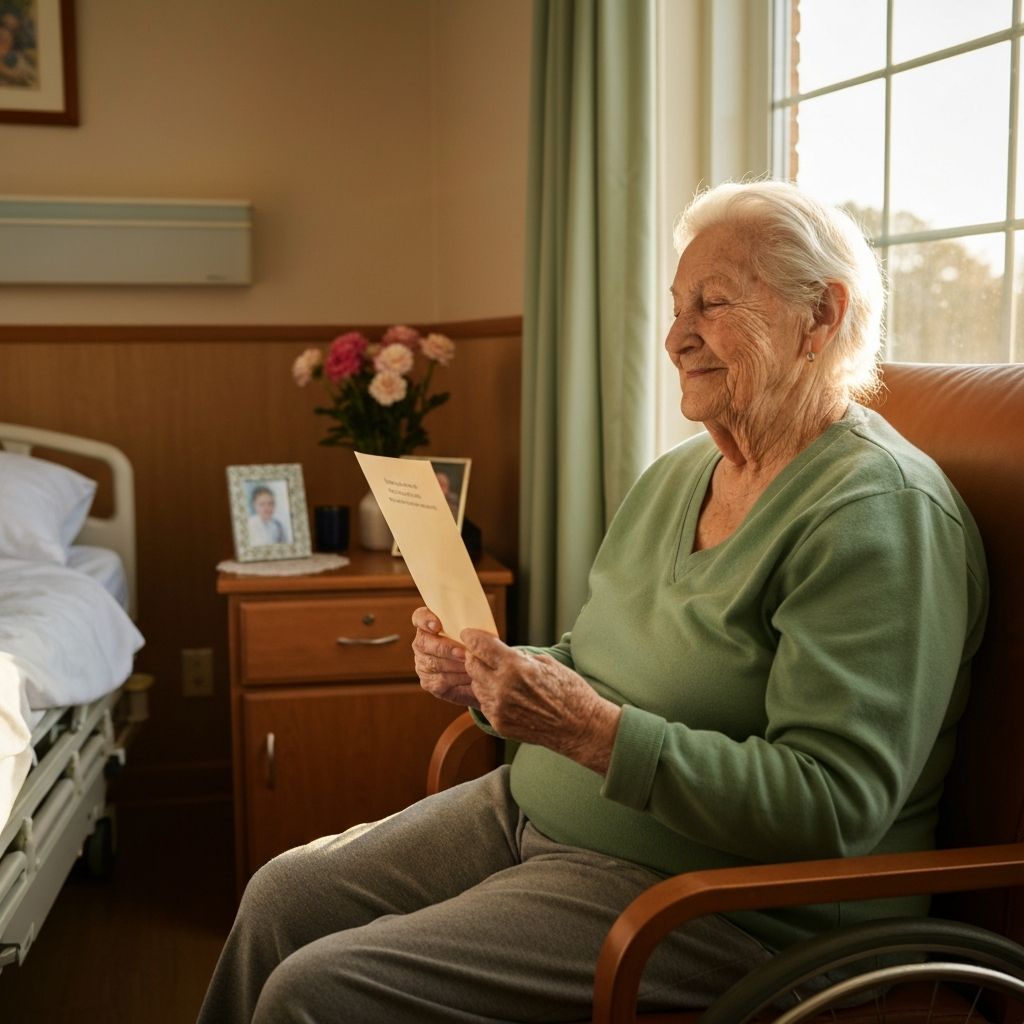
Your residents are waiting for mail that doesn't come.
You didn't enter this field to run a warehouse. You entered it because elder care matters—because the people in your building deserve dignity and connection in their final years.
The loneliness crisis isn't going to solve itself. Volunteers won't suddenly appear. Technology won't suddenly work for residents with dementia. But a letter can arrive this month, and next month, and every month after—proving to your residents that someone out there knows their name.
Let's talk about what that could look like for your community.